Education Lighting Solutions: EN 12464-1 Compliant LED Lighting for Schools
EN 12464-1 compliant LED lighting for schools, colleges and universities: 300 lux in classrooms, 500 lux on the teaching board, UGR ≤ 19.
OEM and ODM manufacturing for European lighting brands, wholesalers and installers.
What Kinds of Lighting Are Used in Schools?
A school is not one lighting task but a dozen. EN 12464-1 sets a different maintained illuminance, glare limit and color rendering target for each room type, and a compliant building needs several luminaire families working together. These are the six product groups that cover a typical European education project from classroom to playground.

UGR<19 LED Edge-lit Panel Lights
Application: Classrooms, libraries, administrative offices Features: Uniform light distribution, low glare (UGR<19), energy-efficient, available in dimmable and tunable white versions Benefits: Prevents eye strain, enhances concentration

LED Linear Lights
Application: Hallways, Office Laboratories Features: Sleek design, can be continuous or modular, available with sensors or dimming options Benefits: Modern aesthetic, efficient for large spaces, easy maintenance

Blackboard Lamps & Chalkboard Lights
Application: Mounted above blackboards or whiteboards Features: Asymmetric beam angle to evenly illuminate the writing surface without glare Benefits: Helps students see the board clearly from all angles

Recessed Downlights
Application: Corridors, washrooms, entrance areas Features: Compact and discreet, various beam angles and wattages Benefits: Clean ceiling appearance, functional lighting

Emergency Lights
Application: Exit routes, stairwells, emergency exits Features: Automatically switch on during power outages, long battery life Benefits: Ensures safety and compliance with building codes

Outdoor Waterproof Lights
Application: Playgrounds, school entrances, parking areas Features: High lumen output, waterproof (IP67), IK-rated(IK10) for impact resistance Benefits: Provides visibility and security after dark
EN 12464-1 Lighting Requirements for Education Buildings
EN 12464-1 “Light and lighting — Lighting of work places, Part 1: Indoor work places” is the reference standard for every school, college and university project in the EEA and the UK. It is adopted nationally as BS EN 12464-1 in Britain, DIN EN 12464-1 in Germany, NF EN 12464-1 in France, UNI EN 12464-1 in Italy and NEN-EN 12464-1 in the Netherlands — the same numbers under a different cover.
The table below lists the maintained illuminance (Ēm), unified glare rating limit (UGRL), illuminance uniformity (Uo) and color rendering index (Ra) that the standard sets for education spaces, together with the OLAMLED luminaire family that meets each one.
| Area or task (EN 12464-1) | Ēm lux | UGRL | Uo | Ra | OLAMLED luminaire |
|---|---|---|---|---|---|
| Classrooms, tutorial rooms | 300 | 19 | 0.60 | 80 | LED Panel Light |
| Classrooms for evening classes and adult education | 500 | 19 | 0.60 | 80 | LED Panel Light |
| Lecture halls and auditoria | 500 | 19 | 0.60 | 80 | LED Linear Light |
| Teaching board (blackboard / whiteboard), vertical | 500 | 19 | 0.70 | 80 | Asymmetric blackboard luminaire |
| Demonstration table (750 lux in lecture halls) | 500 | 19 | 0.70 | 80 | LED Track Light |
| Art rooms | 500 | 19 | 0.60 | 80 | LED Panel Light |
| Art rooms in art schools | 750 | 19 | 0.70 | 90 | Ra 90 panel / linear |
| Technical drawing rooms | 750 | 16 | 0.70 | 80 | UGR<16 Louver Light |
| Practical rooms and laboratories | 500 | 19 | 0.60 | 80 | LED Linear Light |
| Handicraft rooms and teaching workshops | 500 | 19 | 0.60 | 80 | LED Linear Light |
| Computer practice rooms and language laboratories | 300 | 19 | 0.60 | 80 | Low-glare louver / panel |
| Staff rooms | 300 | 19 | 0.60 | 80 | LED Panel Light |
| Library — bookshelves | 200 | 19 | 0.60 | 80 | LED Track Linear Light |
| Library — reading areas | 500 | 19 | 0.60 | 80 | LED Panel Light |
| Entrance halls | 200 | 22 | 0.40 | 80 | Recessed downlight |
| Circulation areas and corridors | 100 | 25 | 0.40 | 80 | LED Linear Light |
| Stairs | 150 | 25 | 0.40 | 80 | LED Batten / Tri-Proof |
| Student common rooms and assembly halls | 200 | 22 | 0.40 | 80 | LED Track Light |
| Sports halls, gymnasia and swimming pools (general use) | 300 | 22 | 0.60 | 80 | LED High Bay Light |
| School canteens | 200 | 22 | 0.40 | 80 | LED Track Light |
| Kitchens | 500 | 22 | 0.60 | 80 | Cleanroom Troffer / IP65 |
| Sanitary facilities and washrooms | 200 | 25 | 0.40 | 80 | IP44 recessed downlight |
Values are maintained illuminance on the task area as set out in EN 12464-1 for education premises. The 2021 revision added modifying factors that can raise the required level — for example where visual work is demanding, where occupants are over 50, or where errors are costly to correct. Always verify the final specification against the current national adoption for the project country.
Types of Education Lighting Solutions
LED Panel Lights
LED Panel Lights: for classrooms, libraries and staff offices
UGR ≤ 19 as standard, UGR ≤ 16 on request: meets the EN 12464-1 glare limit for classrooms and the tighter limit specified for screen-intensive IT rooms
300–500 lux maintained at 0.8 m: 600×600 and 1200×300 formats sized to hit the classroom target on a standard 2.7 m ceiling grid
Uo ≥ 0.60 uniformity: even illuminance across desks so pupils at the back of the room read under the same conditions as those at the front
Ra ≥ 80, Ra ≥ 90 option: accurate color for art rooms and science laboratories
Tunable white 3000–6000K and DALI-2 dimming: supports human centric lighting schedules and daylight-linked dimming under EN 15193
Flicker-free driving: PstLM ≤ 1.0 and SVM ≤ 0.4, well inside the EU Ecodesign (ErP) 2021 limits


LED Linear Lights
LED Linear Lights: for corridors, circulation, laboratories and lecture halls
Continuous or modular runs: trunking systems let a specifier build a 1500–3000 mm line and hold Uo ≥ 0.40 along a corridor without dark patches between fittings
100–200 lux for corridors and stairs: EN 12464-1 asks for lower maintained illuminance in circulation but higher uniformity, which is what a continuous line delivers and spot downlights do not
Direct / indirect distribution: an up-light component lifts ceiling and wall luminance, reducing the cave effect in deep-plan teaching spaces
500 lux versions for laboratories and technical drawing rooms: the higher EN 12464-1 task levels, with Ra ≥ 80
Emergency and DALI variants: integrated 3-hour self-test emergency to EN 1838, addressable per luminaire
Blackboard Lamps
Blackboard Lamps: for whiteboards, chalkboards and interactive screens
500 lux vertical on the board: EN 12464-1 treats the teaching wall as a separate task area at 500 lux — a classroom that only lights the desks fails this clause
Asymmetric beam: throws light onto the board plane while keeping the luminaire out of the teacher’s field of view and off the pupils’ line of sight
Uo ≥ 0.70 on the board: the tighter uniformity EN 12464-1 requires for vertical task areas, so text at the edge of the board reads as clearly as text at the center
Veiling-reflection control: the asymmetric optic suppresses specular reflections from glossy whiteboards and interactive display glass
Separately switched: wired on its own circuit so staff can dim the board light for projection without dropping desk illuminance


Recessed Downlights
Recessed Downlights: for corridors, washrooms, entrances and reception areas
100–200 lux to EN 12464-1: the maintained levels for circulation areas, entrance halls and sanitary facilities
IP44 washroom versions: rated for the moisture zones in school toilets and changing rooms
UGR ≤ 22 with recessed optics: glare control appropriate to circulation, where occupants look horizontally rather than at a task plane
Adaptation zones at entrances: higher illuminance at doorways so eyes adapt between daylight and interior levels — a safety requirement, not a comfort one
Compact and flush-mounted: shallow recess depth for the limited plenum in refurbishment projects
Emergency Lights
Emergency Lights: for escape routes, stairwells and final exits
A legal requirement, not an option: every non-domestic building in the EU and UK — schools, colleges and universities included — must provide emergency escape lighting
EN 1838 performance: 1 lux minimum along the center line of an escape route, 0.5 lux for open (anti-panic) areas, 15 lux at high-risk task points
3-hour duration: the duration normally specified for education buildings under BS 5266-1 and its European equivalents
Self-test and DALI-2 addressable versions: automatic monthly function and annual duration tests, logged per luminaire, which removes the manual test burden from site staff
Maintained and non-maintained: exit signage running continuously, escape luminaires switching only on mains failure


Outdoor Waterproof Lights
Outdoor Waterproof Lights: for playgrounds, entrances, covered walkways and parking areas
IP65 and IP66 sealing: tri-proof and bulkhead bodies rated for washdown, driving rain and dust in exposed school environments
IK08–IK10 impact rating: vandal and ball-impact resistance for playgrounds, covered courts and sports halls
EN 12464-2 for outdoor work areas: car parks and pedestrian routes lit to the outdoor workplace standard rather than guessed at
Obtrusive light control: full cut-off optics and low upward light ratio to limit spill onto neighboring housing — increasingly a planning condition across Europe
−20°C to +45°C operation: drivers rated for northern and central European winters
Why Lighting Matters in Schools: Enhancing Safety, Comfort, and Learning Efficiency
Across Europe, lighting is one of the few school building services that is simultaneously a wellbeing issue, a compliance issue and an energy issue — which is why it keeps appearing in refurbishment budgets.
Wellbeing and attainment. Glare and flicker are the two failure modes that show up as headaches, eye strain and lost concentration. EN 12464-1 caps discomfort glare at UGR 19 in classrooms; the EU Ecodesign regulation caps flicker at PstLM ≤ 1.0 and stroboscopic effect at SVM ≤ 0.4. Meeting both is the baseline, not a selling point.
Daylight and the electric top-up. EN 17037 sets daylight provision targets for European buildings. Electric lighting in a well-daylit school should be a daylight-linked top-up, not a constant load — which is why photocell and presence control under EN 15193 typically cuts consumption further than the luminaire swap alone.
Energy and net zero. Replacing T8 fluorescent battens and first-generation LED panels with 130–150 lm/W luminaires plus DALI-2 control routinely halves lighting energy in an education building. With fluorescent T5 and T8 lamps now phased out under RoHS across the EU and Great Britain, schools running legacy fittings are facing a forced replacement anyway.
Life safety. Emergency escape lighting to EN 1838 is a legal duty in every European education building, tested and logged. Self-test luminaires remove that burden from site staff.
- Glare: UGR ≤ 19 in classrooms, UGR ≤ 16 in technical drawing rooms — the EN 12464-1 limits, verified by photometric report.
- Color rendering: Ra ≥ 80 throughout, Ra ≥ 90 for art rooms and science laboratories.
- Uniformity: Uo ≥ 0.60 on the desk plane and ≥ 0.70 on the teaching board.
- Flicker: PstLM ≤ 1.0 and SVM ≤ 0.4, meeting the EU Ecodesign (ErP) limits in force since September 2021.
- Control: DALI-2 dimming with presence and daylight sensing, evaluated under EN 15193 for the building's energy performance.
- Life safety: emergency escape lighting to EN 1838 — 1 lux on escape routes, 3-hour duration, self-test logging.
- Robustness: IP44 for washrooms, IP65 outdoors, IK08–IK10 for sports halls and playgrounds.
- Photobiological safety: Risk Group 0 (exempt) to EN 62471 — the expected classification where children are present.
Compliance and Certification for the European Market
A school luminaire sold into the EEA or the UK has to clear more than a photometric target. These are the documents a European specifier, wholesaler or main contractor will ask us for before an order is placed — and what each one actually covers.
| Requirement | Reference | What it covers in an education project |
|---|---|---|
| CE marking / UKCA | LVD 2014/35/EU, EMC 2014/30/EU | Mandatory market access for the EEA and Great Britain. Backed by a Declaration of Conformity and a technical file. |
| Luminaire safety | EN 60598-1 and the relevant Part 2 | General luminaire safety plus the part clause for recessed, surface, waterproof or emergency types. |
| ENEC mark | Third-party certified to EN 60598 | Frequently required in Germany, the Nordics and the Benelux, and increasingly written into public tender documents. Available on request. |
| Ecodesign (ErP) | Regulation (EU) 2019/2020 | Minimum efficacy, standby power, and the flicker limits PstLM ≤ 1.0 and SVM ≤ 0.4. Also requires EPREL registration for the EU market. |
| Energy labeling / EPREL | Regulation (EU) 2019/2015 | Light source registration in the EU product database before placing on the market. |
| Photobiological safety | EN 62471 / IEC TR 62778 | Blue light hazard classification. Risk Group 0 (exempt) is the expected result for luminaires in spaces used by children. |
| Emergency lighting | EN 1838, EN 60598-2-22, BS 5266-1 (UK) | Escape route illuminance, duration, and the test and log regime for the installed system. |
| Photometry | LM-79 / EN 13032, LDT and IES files | Independent test data plus the photometric files a designer needs to run a DIALux or Relux calculation and prove the EN 12464-1 numbers. |
| Lumen maintenance | LM-80 / TM-21 | Substantiates the L80B10 or L70B50 life claim used in the maintenance factor. |
| RoHS and REACH | Directive 2011/65/EU, Reg. 1907/2006 | Restricted substances. Also the mechanism that has phased out T5 and T8 fluorescent lamps across the EU and GB. |
| WEEE and packaging | Directive 2012/19/EU | Producer registration and take-back obligations in each member state of sale. |
| Control gear | DALI-2 / DiiA certified | Interoperability with the building management system, and with daylight and presence sensors under EN 15193. |
OLAMLED supplies the full document pack — DoC, test reports, LDT/IES photometry and LM-80 data — with every education project, and can register products under a customer's own brand for OEM and private-label supply.
Hassle-Free OEM & ODM Services and Support at OLAMLED
Customize For You
ISO9001:2000 certified factory
Low MOQ From 1pcs
Develop Molds For You
Packaging Design For You
Certification For You
Custom High Quality LED Products Process
See How We’ll Work Together
Discover
Our team learns more about your specific requirements through an in-depth consultation and discovery process.
Define
Based on the detailed information we obtained during the consultation process, we determined the structure, parameters, application scenarios and other related requirements of the project.
Solution
We have prepared an estimated quotation for this project, which includes the required materials and the specific customization work we will undertake.
Contract
We then send you a copy of the contract for approval, signifying our mutual agreement regarding the project.
Prototype
A functional sample will be created for testing, recalibrating the sample for improvements and optimization.
Review
We send you a sample of the project and discuss how it fits your specifications. Any revision requests are taken and implemented until you’re satisfied with the results.
Meticulous LED Light Production & Inspection
We Show our production team, warehouse, test equipment and other aspects here to ensure that your order is fulfilled

Laser Cutting Machine

LED Bending Machine
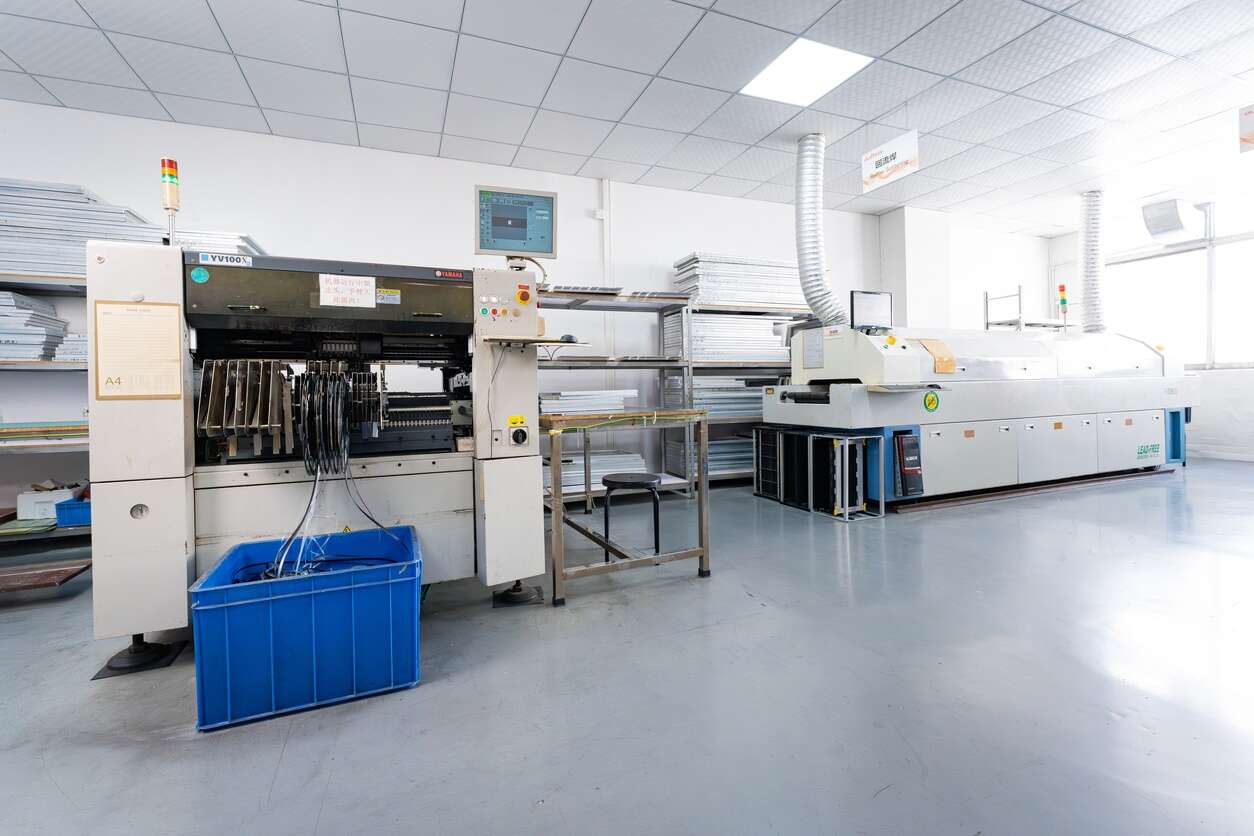
SMT Workshop

Laser Machine

Raw Material Warehouse

Goniophotometer

Photoelectric Test

Aging Test

Integrated Sphere Test
Education Lighting: Frequently Asked Questions
What lux level is required in a classroom?
EN 12464-1 requires 300 lux maintained on the desk plane in a general classroom, and 500 lux in classrooms used for evening classes and adult education.
The teaching board is a separate task area at 500 lux vertical. Practical rooms and laboratories are 500 lux, and technical drawing rooms 750 lux. These are maintained values — the level at the end of the maintenance cycle, not the day the lights are switched on.
What UGR is required for classroom lighting?
UGR ≤ 19 for classrooms, lecture halls, libraries and staff rooms; UGR ≤ 16 for technical drawing rooms; UGR ≤ 22 for entrance halls, canteens and sports halls; UGR ≤ 25 for corridors and stairs.
UGR is a property of the room and the installation, not of the luminaire alone. A luminaire is correctly described as suitable for UGR ≤ 19 applications; the figure has to be confirmed by calculation for the actual room geometry and reflectances.
Is emergency lighting a legal requirement in schools?
Yes. Emergency escape lighting is a legal requirement in every non-domestic building across the EU and the UK, schools, colleges and universities included.
EN 1838 sets the performance: a minimum of 1 lux along the center line of an escape route, 0.5 lux in open anti-panic areas, and 15 lux at high-risk task areas. Education buildings are normally specified for 3-hour duration, and the system must be tested and logged — monthly function tests and an annual full-duration test.
What color temperature is best for classrooms?
4000K neutral white is the usual specification for European classrooms. 3000K warm white suits libraries, common rooms and early-years spaces; tunable white 3000–6000K allows one room to serve both.
Cooler light supports alertness during focused work, warmer light supports calm and relaxation. Tunable white systems let a teacher move between the two across the school day. Note that EN 12464-1 does not mandate a correlated color temperature — it is a design decision, unlike the illuminance, glare and color rendering values, which are requirements.
Does flicker in classroom lighting matter?
Yes, and it is now regulated. Since September 2021 the EU Ecodesign regulation has capped short-term flicker at Pst LM ≤ 1.0 and the stroboscopic visibility measure at SVM ≤ 0.4 for mains-operated light sources.
Flicker below the threshold of conscious perception is still associated with headaches, eye strain and reduced reading performance — effects that matter more in a room where children sit for six hours a day. The driver, not the LED, determines flicker performance, which is why the driver specification deserves as much attention as the luminaire body.
Which European standards apply to school lighting?
EN 12464-1 for indoor lighting, EN 12464-2 for outdoor work areas, EN 1838 for emergency escape lighting, EN 17037 for daylight, and EN 15193 for the energy performance of the lighting installation.
EN 12464-1 is adopted nationally without change of content — BS EN 12464-1 in the UK, DIN EN 12464-1 in Germany, NF EN 12464-1 in France, UNI EN 12464-1 in Italy, NEN-EN 12464-1 in the Netherlands, SS-EN 12464-1 in Sweden. In the UK, CIBSE/SLL Lighting Guide LG5 gives additional guidance specific to education buildings.
Can OLAMLED supply education luminaires under our own brand?
Yes. OLAMLED is an OEM and ODM manufacturer, and most of what we build for Europe ships under a customer’s brand rather than ours.
That covers custom housing and finish, customer-specified drivers (Tridonic, Philips, Osram), private-label packaging and labeling, and documentation issued in the customer’s name for CE and EPREL purposes. See our OEM & ODM services for how the process runs.
What is the lead time for a European school project?
Samples in 3–5 days; production orders in 20–25 working days after sample approval and deposit.
Sea freight to Northern European ports adds roughly 30–35 days. For phased summer-holiday installation programs we schedule production against the site program rather than the order date, so luminaires land in the window when the school is empty.
How much energy does an LED lighting upgrade save in a school?
Replacing T8 fluorescent battens with 130–150 lm/W LED luminaires typically cuts lighting energy by 50–60 per cent; adding DALI-2 presence and daylight control takes the total to 65–75 per cent.
Corridors, sports halls and toilets give the largest control savings because occupancy is intermittent. Classrooms give the largest daylight-dimming savings where the glazing is good. With T5 and T8 fluorescent lamps now phased out under RoHS, schools running legacy fittings face replacement regardless of the payback calculation.
Our Major Partners


Keeping Proprietary Details Confidential
Your Ideas, Protected as Our Own
You invest more than just time and money into your designs—you invest your trust. At OLAMLED, we treat that trust as the foundation of our partnership.
From the first sketch to the final delivery, confidentiality isn’t an add-on;
it’s our standard practice. Your specifications, drawings, product concepts, and even the discussions we have—they all stay with us. They never reach your competitors.
We are not merely signing confidentiality agreements. We will strictly abide by these agreements. Moreover, before we start discussing any details of your project, we would be more than happy to sign an agreement first.
Why? Because your success is your competitive edge. Protecting it is ours.