A track lighting system looks simple : a rail, a few fixtures and a power connection.
For a commercial project, however, there is more going on.
The rail needs to match the fixture adapter. The electrical configuration needs to suit the project. The fixture has to provide the right light distribution. If dimming or multi-zone control is required, the driver and control system also need to be specified correctly.
That is why a track lighting system should be treated as a complete system rather than a collection of individual lights.
This guide explains how track lighting works, what the main components do, how to choose between different configurations, what to check before installation and what information to request from a supplier.
What Is a Track Lighting System?
A track lighting system is a lighting arrangement in which luminaires connect to an electrically supplied track.
The track provides both the mechanical mounting point and the electrical connection. Different fixtures can then be positioned along the rail, depending on the track design and luminaire type.
Compared with a fixed ceiling light, the main advantage of a track system is layout flexibility.
A commercial space may change over time. Retail displays move, showroom layouts are updated and some areas may need a different lighting direction.
A track system can make these changes easier without replacing the whole ceiling lighting layout.
Commercial systems can include:
- Track spot or directional fixtures
- Track panel fixtures
- Linear track lights
- Three-circuit track systems
- Dimmable track systems
- Suspended or surface-mounted track installations
How Do Track Lighting Systems Work?
The basic principle is straightforward.
The electrical supply enters the track. Conductors inside the rail carry power. Each luminaire uses an adapter that connects mechanically and electrically to the track.
The fixture can then be positioned or aimed according to the lighting task.
A typical system can be understood as four parts:
1. Track Rail
The rail is the main infrastructure.
It determines how luminaires are mounted and how power is distributed.
2. Adapter
The adapter connects the fixture to the rail.
This is one of the parts that buyers should check carefully because different track systems are not automatically interchangeable.
3. Luminaire
The actual light fitting determines the optical performance.
This is where beam angle, light distribution, CCT, CRI, power, lumen output and glare control come into play.
4. Driver and Controls
The driver converts and regulates the electrical supply for the LED light source.
Depending on the project, the system may use on/off control, 1-10V dimming, DALI or another control method. For projects using DALI-2, the control system can include LED drivers, application controllers and input devices such as sensors, as outlined by the DALI Alliance’s DALI-2 system overview.
The key point is that the rail, adapter, fixture, driver and control system should be specified as one compatible setup.

Why Track Compatibility Matters
One of the easiest mistakes to make when purchasing track lighting is to assume that all tracks are interchangeable.
They are not.
Track systems have specific mechanical and electrical requirements. For example, IEC 60570 sets requirements for electrical supply track systems for luminaires used in ordinary interior applications. The current consolidated edition combines the 2003 standard with amendments from 2017 and 2019.
For a project buyer, the practical question is more specific:
Will this exact luminaire adapter fit and operate correctly on the track being used on site?
Before ordering, confirm:
- Track manufacturer or reference
- Number of circuits
- Wire or pole configuration
- Adapter type
- Rated voltage
- Mechanical fit
- Electrical contact
- Phase selection
- Dimming compatibility
This is particularly relevant for retrofit projects.
If an existing track is already installed, the supplier should check the actual track reference rather than quoting based only on a photo.
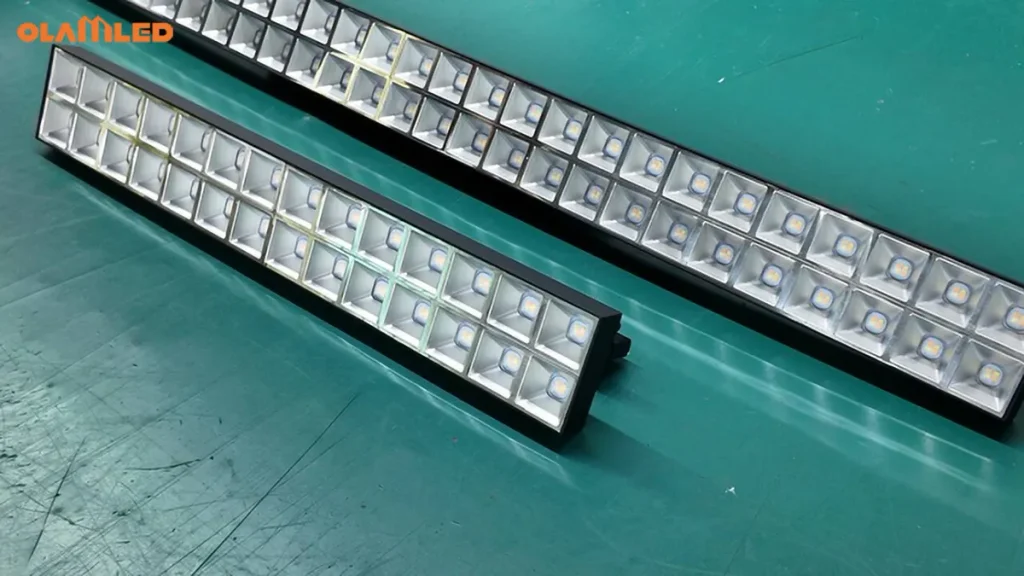
For example, OLAMLED’s TK02 linear track light uses a POWERGEAR 3-circuit adapter and is designed to match existing European 3-circuit track rail brands such as Eutrac, Global and Staff. This type of compatibility information should be confirmed against the actual track system before ordering.
Track Lighting System vs. Fixed Ceiling Lighting
A track lighting system is useful when the position of light needs to remain flexible.
Fixed ceiling lighting is usually more appropriate when the lighting layout is stable and the fixtures are intended to stay in predetermined locations.
| Requirement | Track Lighting System | Fixed Ceiling Lighting |
| Repositioning | Flexible | Limited |
| Display changes | Suitable | Usually requires relocation work |
| Directional lighting | Strong | Depends on fixture |
| Continuous architectural lines | Possible with linear track | Strong with linear systems |
| Retrofit flexibility | Often useful | Depends on existing ceiling |
| Circuit zoning | Available on suitable systems | Depends on wiring |
| Installation interface | Rail + adapter | Fixture + ceiling structure |
The right choice depends on whether the project needs flexibility or fixed integration.
Choosing Between Different Track Light Configurations
Not every commercial application needs the same type of fixture.
Track Light LED for Directional Lighting
A conventional track light LED fixture is often used when the lighting needs to be aimed toward a particular area.
This can be useful for:
- Merchandise displays
- Artwork
- Shelving
- Feature walls
- Showroom products
- Hospitality spaces
The main specifications to check are beam angle, aiming range, CRI and glare.
A narrow beam can concentrate light on a smaller target, while a wider beam covers more of the surrounding area.
Linear Track Light for Longer Runs
A linear track light combines the track mounting concept with a longer linear form.
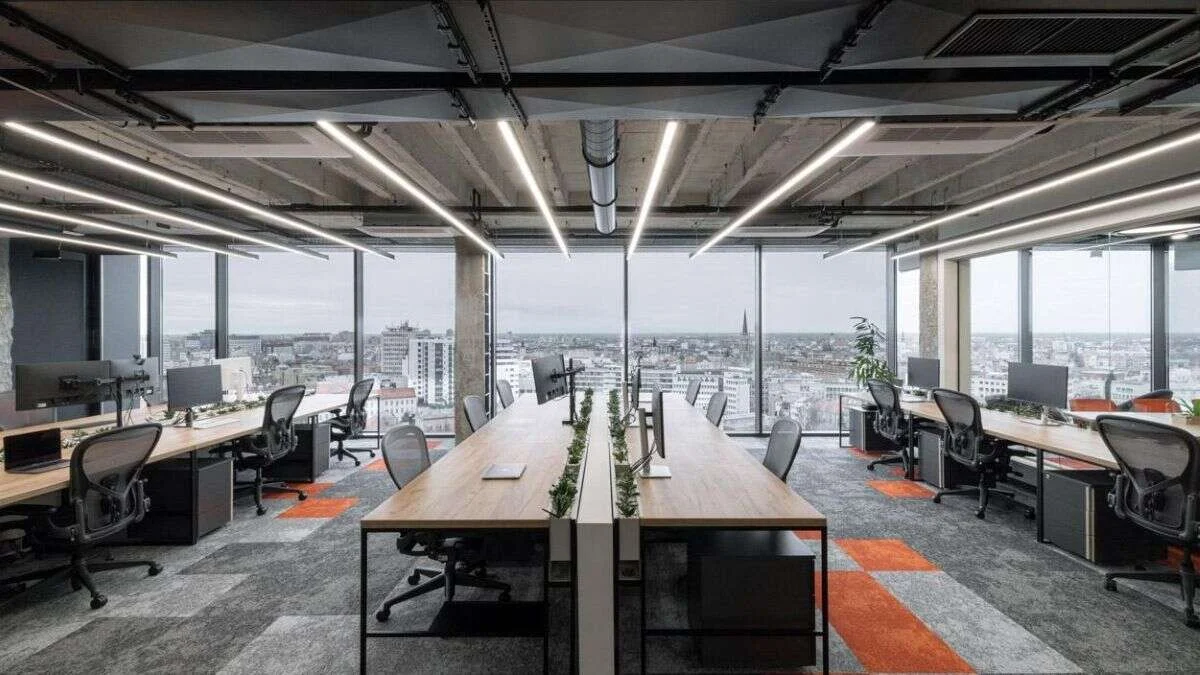
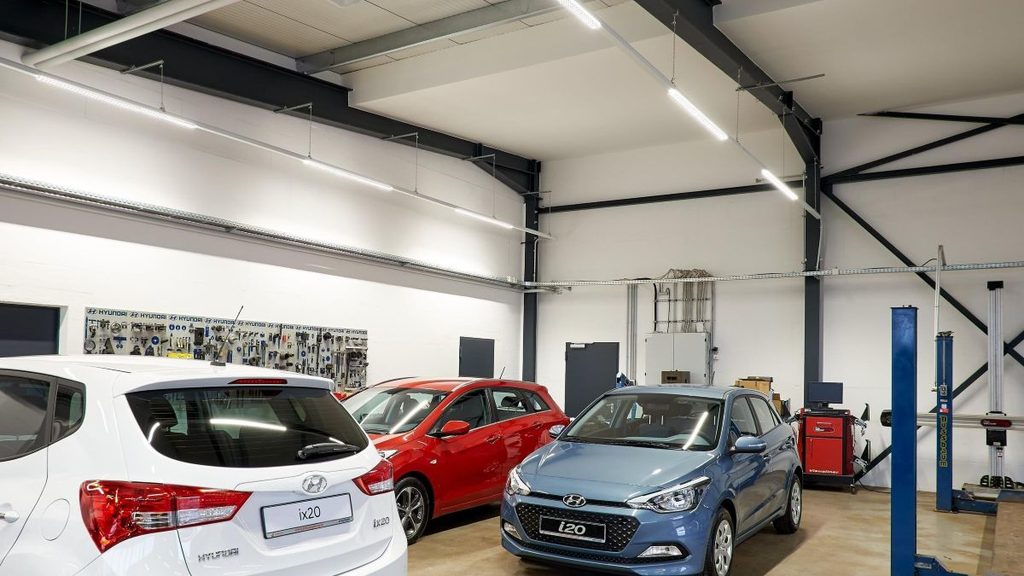
It is useful when a project needs a more continuous architectural appearance while retaining some of the flexibility associated with track systems.
Typical applications include:
- Retail aisles
- Long display areas
- Supermarkets
- Commercial interiors
- Open retail spaces
Track Panel Lighting for Broader Coverage
A track-mounted panel format provides a broader illuminated area than a small directional track head.
This can make sense when the project needs:
- Wider light distribution
- General lighting on a track system
- A larger luminous surface
- Adjustable power
- Lower-glare options
The exact product configuration should still be matched to the room and lighting calculations.
A Simple Track Lighting System Specification
When requesting an RFQ, avoid sending only:
Need track lights, 100 pcs.
A more useful specification could include:
| Requirement | Example |
| Track system | 3-circuit |
| Track reference | Existing / proposed model |
| Fixture type | Track head / panel / linear |
| Quantity | 100 pcs |
| Beam angle | Project requirement |
| CCT | Project requirement |
| CRI | Project requirement |
| Power | Project requirement |
| Dimming | On/off / 1-10V / DALI |
| Finish | Black / White |
| Installation | Surface / Suspended / Recessed |
| Photometric file | Required |
| Sample | Required |
| Compliance | Target market |
| Customisation | Yes / No |
This gives suppliers enough information to quote against the same technical basis.

What Should You Check Before Buying LED Track Light Fixtures?
Before comparing quotations, define the project requirements first. A track lighting system should be evaluated as a complete setup rather than by fixture price alone.
1. Track Type and Compatibility
Start with the existing or proposed rail system.
Specify the actual track reference whenever possible rather than simply writing “track compatible.”
Check:
- Is the track standard confirmed?
- Is the circuit configuration clear?
- Is the adapter compatible?
- Is the existing rail suitable for the new fixture?
- Are the rated voltage and electrical configuration suitable?
This is particularly important for retrofit projects, where the new fixture needs to match the track already installed on site.
2. Fixture Type
Decide what the lighting needs to do before choosing the fixture format.
Depending on the project, this may include:
- Directional heads
- Track panels
- Linear track lights
- A combination of different fixtures
A display-focused area may require directional lighting, while a larger sales floor may need broader and more even coverage.
3. Beam Angle and Light Distribution
Beam angle should follow the lighting task.
A display area may need a more focused beam, while general lighting usually benefits from broader coverage.
Also consider fixture spacing, mounting height and aiming direction, as these factors affect the final distribution of light.
4. CCT and CRI
Choose CCT according to the interior and project brief.
CRI should also be selected based on the application, especially where colour appearance matters, such as retail displays, showrooms and hospitality spaces.
When several fixture types are used within the same project, keeping their colour characteristics consistent should also be considered.
5. Glare Control
For offices, galleries, premium retail and other visually sensitive spaces, glare control should be included in the specification.
If a supplier provides a UGR value, ask for the conditions behind the figure rather than treating the number as independent from the room.
Where required, request the relevant photometric information and calculation assumptions as part of the technical documentation.
6. Driver, Dimming and Controls
Confirm the electrical and control requirements before approving the fixture.
Depending on the project, this may include:
- On/off
- 1-10V
- DALI
- DALI-2
- Sensor control
- Emergency functions
The driver should match the required control system. A fixture can be mechanically compatible with the track and still require a different driver configuration for the project’s dimming or control system.
7. Housing Finish
Finish should be considered as part of the overall interior design.
Black track lights can work well where the rail and fixtures are intended to blend into a darker ceiling or coordinate with a dark interior.
White finishes can provide a lower-contrast appearance against white ceilings.
The finish is therefore not only a cosmetic decision. It also affects how visible the track system is within the space.
8. Installation Requirements
Before ordering, confirm the complete installation arrangement.
Check:
- Is the rail layout approved?
- Are feed points confirmed?
- Is the mounting structure suitable?
- Is the installation method clear?
- Is driver access available?
- Are fixture spacing and aiming defined?
For larger projects, these details should match the approved drawings before production begins.
9. Technical Documentation
Do not evaluate a commercial track lighting fixture based only on the product image or catalogue description.
Request the relevant documentation, including:
- Product datasheet
- Installation drawing
- Photometric file
- Driver datasheet
- Compliance documents
- Warranty
- Sample approval record
For projects with defined performance requirements, the technical documents should correspond to the exact configuration being quoted.
10. Sample and Final Configuration
For larger commercial projects, approve the actual configuration before mass production.
Confirm that the sample matches the agreed:
- Fixture type
- Track adapter
- Power
- Beam angle
- CCT and CRI
- Driver
- Dimming method
- Housing finish
- Installation accessories
Once approved, the sample should serve as the reference configuration for production.
Free Track Lighting RFQ Checklist
Planning a commercial track lighting project?
Use this practical worksheet to define track compatibility, fixture specifications, controls, photometric documents and sample approval requirements before requesting quotations.
Track Lighting System: A Practical Comparison
A useful way to think about a track lighting system is not simply:
“Which LED light should I buy?”
Instead, ask:
What needs to stay fixed, and what needs to remain flexible?
The rail provides the infrastructure.
The adapter provides compatibility.
The luminaire provides the optical performance.
The driver and controls determine how the system operates.
The layout determines what the people in the space actually see.
Once these elements are considered together, it becomes much easier to decide whether a conventional track light, track panel or linear track light is appropriate.
The choice should also fit the wider lighting plan. When comparing track, linear and grille fixtures for a commercial space, OLAMLED offers further guidance on matching fixture types to the building layout and lighting requirements.
For projects with unusual ceiling layouts, custom dimensions or coordinated lighting requirements, it is also worth discussing the specification with a manufacturer before finalising the design.
FAQ
Are All Track Lights Compatible With the Same Track?
No. Track profiles, electrical configurations and adapters can vary between systems.
Before ordering, check the track manufacturer or reference, number of circuits, wire configuration, adapter type, rated voltage and mechanical fit. For a retrofit project, it is better to confirm the exact existing track reference rather than relying on a product photo.
The adapter also needs to make a reliable electrical connection and, where applicable, support the required circuit selection and dimming system.
Is a Linear Track Light Suitable for Retail?
It can be a practical choice when a retail space needs longer runs of light while retaining the flexibility of track mounting.
Compared with smaller directional fixtures, a linear track light can provide a broader area of illumination while maintaining a more continuous visual line.
The right configuration still depends on the ceiling, mounting height, beam distribution, fixture spacing and lighting task.
For stores with frequently changing displays, a combination of linear and directional track lighting may also be considered.
How Do You Install Track Lighting?
The exact installation method depends on the rail system, wiring arrangement and local electrical requirements. For commercial projects, installation should follow the manufacturer’s instructions and applicable electrical requirements, with qualified personnel used where required.
A typical installation starts with confirming the approved rail layout, feed point and lighting zones. The rail is then fixed to the supporting structure, followed by the power connection. Compatible adapters and luminaires are fitted to the rail and locked into position, after which the fixtures can be aimed according to the lighting plan.
Before the system is handed over, check power, circuit selection, dimming, fixture operation, mechanical locking and control response.
For example, OLAMLED’s TK02 installation method uses the adapter shaft to lock the fixture into the track and allows the required circuit to be selected after installation.
How Do I Change an LED Track Light?
Start by identifying the exact track and adapter configuration. The replacement fixture needs to be mechanically and electrically compatible with the existing system.
Follow the manufacturer’s replacement procedure and isolate the power supply as required. Remove the existing fitting, install the compatible replacement, confirm the circuit selection and then restore power and test the fixture.
For retrofit projects, do not assume that two fixtures are interchangeable simply because both are described as three-circuit track lights. The adapter, electrical configuration and control system still need to match.
How Do I Fix an LED Track Light That Is Not Working?
Start by identifying whether the problem is with the individual fixture, the adapter, the track or the control system.
If one fixture is not working, check the adapter contact, fixture connection and circuit selection.
If several fixtures stop working at the same time, check the track power supply and circuit.
If dimming is unstable, check the driver and control protocol together.
If the fixture flickers, inspect the driver and control system before assuming that the LED source itself has failed.
If a fixture becomes loose, check the adapter locking mechanism and the track installation.
For repeated failures, it is usually better to investigate the system as a whole rather than replacing individual fixtures without identifying the cause.
Why Is My Track Lighting Uneven?
Uneven lighting is not always caused by the fixture itself.
Check the beam angle, fixture spacing, mounting height and aiming direction first. The position of shelves, displays, walls and other reflective surfaces can also change how light is distributed.
If the fixtures are technically compatible but the result still looks uneven, review the lighting layout and photometric data before simply adding more fittings.
For a commercial project, a lighting calculation can help determine whether the issue comes from spacing, output, beam distribution or fixture positioning.
Why Does My LED Track Light Flicker?
Flickering can be related to the driver, dimming system, power supply or control compatibility.
If the fixture works normally at full power but flickers during dimming, check whether the driver and the selected dimming protocol are compatible.
If several fixtures flicker simultaneously, the issue may be related to the supply or control system rather than an individual luminaire.
When sourcing commercial LED track light fixtures, it is worth confirming the exact driver configuration and control method before final approval, particularly when the project requires dimming.
Where Can I Buy Track Lighting for a Commercial Project?
For a simple replacement, a local electrical distributor may be sufficient.
For larger commercial projects, buyers often need more than the fixture itself. Track compatibility, multiple configurations, driver options, dimming, photometric files, samples, compliance documentation and production support may all be part of the purchase decision.
Buying directly from a manufacturer can also be useful when the project requires custom dimensions, specific finishes or a particular control configuration.
For commercial buyers, OLAMLED’s commercial LED track lighting range can be used as a reference when comparing track heads, track panels and linear track formats.
What Should I Ask an LED Track Light Manufacturer?
Before requesting a final quotation, ask for the information needed to evaluate the complete system.
This normally includes the exact track compatibility, adapter type, driver model, power, lumen output, beam angle, CCT, CRI, control method and installation details.
For project procurement, also request the relevant photometric files, installation drawings, compliance documents, warranty terms and sample information.
If the project is customised, confirm which specifications are fixed for production, including dimensions, finish, driver, controls and any project-specific mechanical requirements.
A clear specification also makes it easier to compare different suppliers on the same technical basis.
What Information Should I Provide When Requesting a Track Lighting Quote?
A supplier can usually quote more accurately when the project information is clear from the beginning.
Instead of sending only a quantity, provide the track type, existing rail reference, fixture type, dimensions, power, target lumen output, beam angle, CCT, CRI, dimming method, finish, installation method and required documentation.
For retrofit work, include the existing track reference and, where available, photos or drawings showing the rail and connection details.
For larger projects, an approved lighting layout or fixture schedule is even more useful because it gives the supplier a clear basis for checking compatibility and preparing the quotation.