The ten LED strip light manufacturers that matter most for buyers sourcing from China in 2026 are Starwire, LEDYi Lighting, Lightstec, Elstar, Lumimore, Hanron, Sdiplight, Signcomplex, Yoshiny Lighting and Gindestar. Each one is profiled below with its founding year, factory base, team size, core strip products and published certifications, so you can shortlist on supply capability rather than on catalog photos.
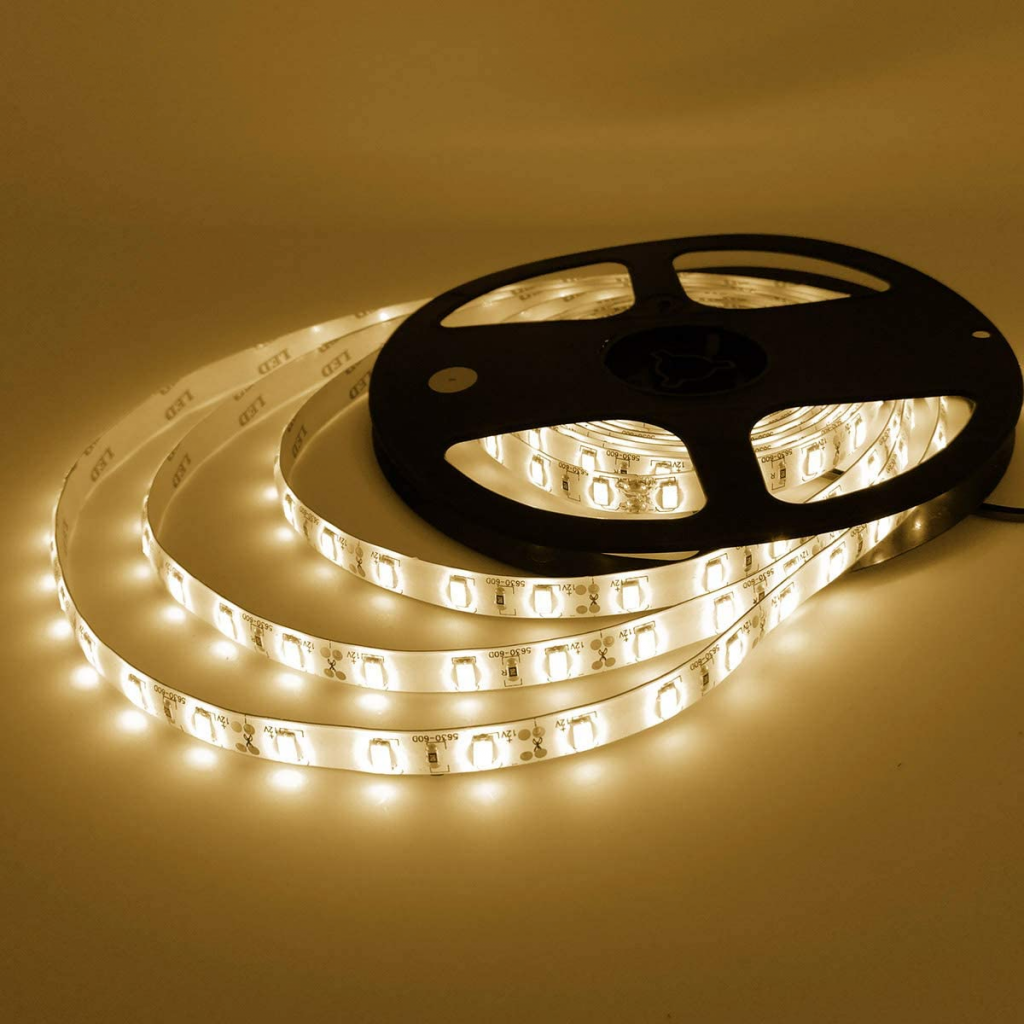
An LED strip light manufacturer is a lighting factory that mounts LED chips onto a flexible printed circuit (FPC) board, applies a phosphor and a protective coating, and cuts the finished tape into reels — typically 5 meters long, 4 mm to 12 mm wide, with cut lines every 25 mm to 100 mm. A supplier, by contrast, may hold no production line at all and simply resell another factory’s reels, which is why the factory-versus-trader distinction decides your price, your lead time and your warranty recourse.
This guide is written for procurement teams, lighting contractors and brand owners rather than for retail shoppers. It covers the 2026 shortlist, the documents you should demand before a first order, the regulatory changes that took effect for the European and North American markets in 2026, and the specification decisions — CCT, CRI, SDCM, voltage, IP rating, LED density — that determine whether a reel performs on site. So which factories actually deserve a place on a 2026 shortlist?
Top 10 LED Strip Light Manufacturers and Suppliers in China (2026)
The table below ranks ten Chinese LED strip light manufacturers by the criteria a buyer can verify before placing an order: how long the factory has operated, where it sits, how large its team is, what it actually builds, and which certifications it publishes. Certification entries reflect what each manufacturer states publicly — always ask for the certificate number and the test report, not the logo.
| # | Manufacturer | Founded | Base | Team | Core strip products | Published certifications | Best suited to |
|---|---|---|---|---|---|---|---|
| 1 | Starwire | 2009 | Shenzhen | 150 | LED strip lights, LED downlights | BV, SGS, RoHS, SAA, CE | Buyers who want strip and downlight from one factory |
| 2 | LEDYi Lighting | 2011 | Shenzhen | 300 | Strip, neon flex, flexible wall washer | ISO 9001, UL, ETL, CB, CE, RoHS | North American and EU projects needing UL/ETL files |
| 3 | Lightstec | 2008 | Guangdong | 77 | Flexible and rigid strip, aluminum profile, linear | Not published | Strip plus extrusion specified as one system |
| 4 | Elstar | 2009 | Guangdong | 450 | Strip plus connectors, drivers, controllers | RoHS, CE | Volume orders that need accessories in the same shipment |
| 5 | Lumimore | 2009 | Shenzhen | Not published | Standard strip and accessories | Not published | Cost-driven standard 12 V / 24 V reels |
| 6 | Hanron | 2010 | Guangdong | 100 | LED neon flex, LED strip (500+ SKUs) | ISO 9001, RoHS, TUV CB, BIS | Neon flex work and India-bound orders needing BIS |
| 7 | Sdiplight | Not published | Guangdong | 200 | Custom-specified strip | Not published | Non-standard lumen, CCT and length specifications |
| 8 | Signcomplex | 2006 | Shenzhen | 500 | Strip, linear, downlight, panel, high bay | Not published | Large-volume programs; 50 lines, 20M strips/year |
| 9 | Yoshiny Lighting | 2004 | Guangdong | 80 | AC strip, DC strip, neon flex | Not published | Mains-voltage AC strip and long continuous runs |
| 10 | Gindestar | 2013 | Dongguan | 80 | LED strip, silicone neon flex | Not published | Silicone neon and halogen-free PVC requirements |
“Not published” in the table is a finding, not a gap in our research: a factory that does not publish its quality-system certification is a factory you must audit harder. The profiles that follow explain what each manufacturer builds and where it fits.
1. Starwire
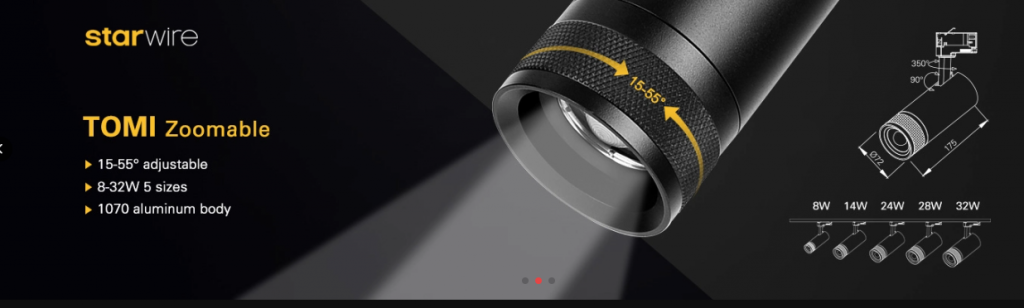
Starwire is a Shenzhen-based LED strip light manufacturer founded in 2009 that runs an 8,000 m² plant with roughly 150 staff. Its catalog splits between LED strip lights and LED downlights, which makes it useful when a single project needs both a cove detail and a recessed downlight from the same supplier and the same color bin.
Starwire publishes BV and SGS audit results and states that its products meet RoHS, SAA and CE requirements — SAA being the Australian mark, which matters if you ship to Australia or New Zealand. The company exports to North America, Australia and Europe.
- Best for: mixed strip-and-downlight packages for AU/NZ and EU projects.
- Ask before ordering: the SAA certificate number and whether the strip or only the downlight range carries it.
YouTube: Starwire channel
2. LEDYi Lighting
LEDYi Lighting carries the broadest certification set on this list, which is the single reason it earns the second position. The Shenzhen company was founded in 2011, employs over 300 people including a dedicated R&D team, and builds LED strip lights, LED neon flex and flexible wall washers.
LEDYi holds ISO 9001, UL, ETL, CB, CE and RoHS. For a North American specifier that combination is decisive: UL or ETL listing is what lets a strip pass an electrical inspection in the United States and Canada, and most Chinese strip factories do not carry it. The plant runs LED packaging machines and high-speed SMT lines with in-house test equipment, and the company sells into Europe, North America, South America and Southeast Asia with OEM and ODM options.
- Best for: US and Canadian projects where an inspector will ask for a UL or ETL file number.
- Ask before ordering: whether the listing covers your exact SKU and voltage, since UL files are issued per construction, not per brand.
YouTube: LEDYi channel
3. Lightstec
Lightstec sells the strip and the extrusion together, which is what separates it from the pure tape factories on this list. Founded in 2008 in Guangdong with a team of about 77 and a 2,000 m² plant, it produces flexible LED strip, rigid LED strip, LED aluminum profiles, LED light channels and panel lights.
Buying tape and channel from one source removes the most common site problem in cove and linear detailing: a diffuser that does not match the strip’s beam or width, producing visible dots through the lens. If your project is closer to architectural LED linear lighting than to decorative tape, that system-level approach is worth the price difference.
- Best for: cove, recessed and surface linear details where profile and diffuser are specified with the tape.
- Ask before ordering: the diffuser transmission loss, because a frosted lens typically costs 15–30% of the strip’s output.
YouTube: Lightstec channel
4. Elstar
Elstar is the accessory specialist of this group. The Guangdong manufacturer started in 2009, runs about 25,000 ft² of production with more than 450 employees, and supplies LED strip lights alongside the connectors, power supplies and controllers the strip needs to work.
That matters more than it sounds. A strip order that arrives without matched connectors and a correctly sized driver stalls on site, and mixing a cheap driver with good tape is the most frequent cause of flicker and premature failure. Elstar’s products carry RoHS and CE and ship mainly into Europe and the Americas. If you are sizing the electrical side yourself, compare against the established LED driver brands before accepting a factory-bundled supply.
- Best for: turnkey reels-plus-drivers-plus-controllers shipments at mid to high volume.
- Ask before ordering: the driver brand and its own certification, which is often the weakest link in a bundled quote.
YouTube: Elstar channel
5. Lumimore

Lumimore competes on price rather than on certification. Established in 2009 with a Shenzhen head office and a production area of roughly 1,000 ft², it offers standard LED strip lights and matching accessories, backed by an in-house R&D function.
Its footprint is the smallest on this list, and it publishes neither a quality-system certification nor a headcount. Treat it as a source for cost-driven standard 12 V and 24 V reels where the specification is undemanding, and audit it properly before committing a project-critical order.
- Best for: price-led standard tape for low-risk indoor applications.
- Ask before ordering: whether Lumimore manufactures or trades, and request a video walkthrough of the SMT line.
YouTube: Lumimore channel
6. Hanron
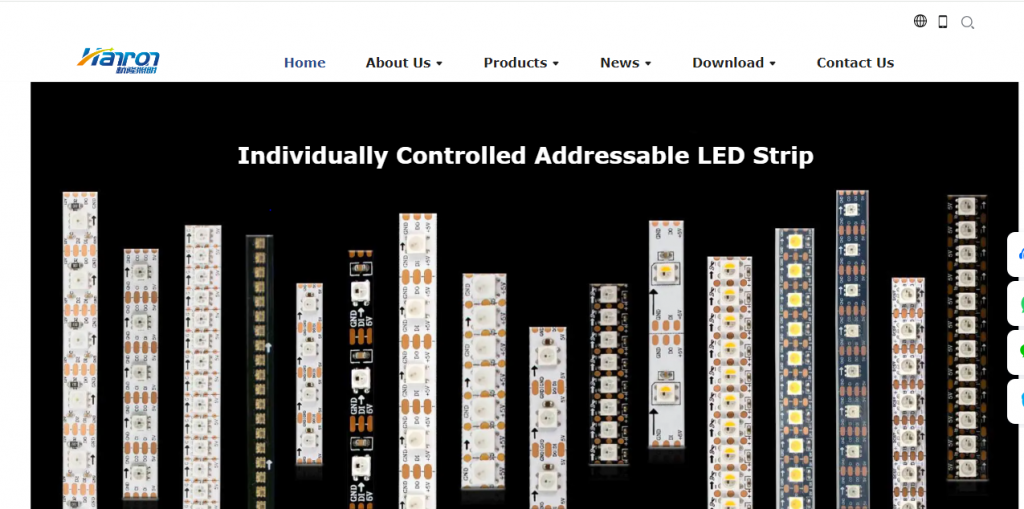
Hanron Lighting is the strongest neon flex option among these ten. Founded in 2010 in Guangdong with more than 100 employees, it builds LED neon lights and LED strip lights across a catalog of over 500 SKUs and offers OEM and ODM development.
Its certification set — ISO 9001, RoHS, TUV CB and BIS — includes one mark the other factories on this list do not publish: BIS, the Bureau of Indian Standards registration required to sell lighting legally in India. If your program touches the Indian market, that single line removes months of compliance work.
- Best for: neon flex signage and facade work, and any order destined for India.
- Ask before ordering: the silicone versus PVC jacket specification, since PVC yellows faster under UV exposure.
YouTube: Hanron channel
7. Sdiplight
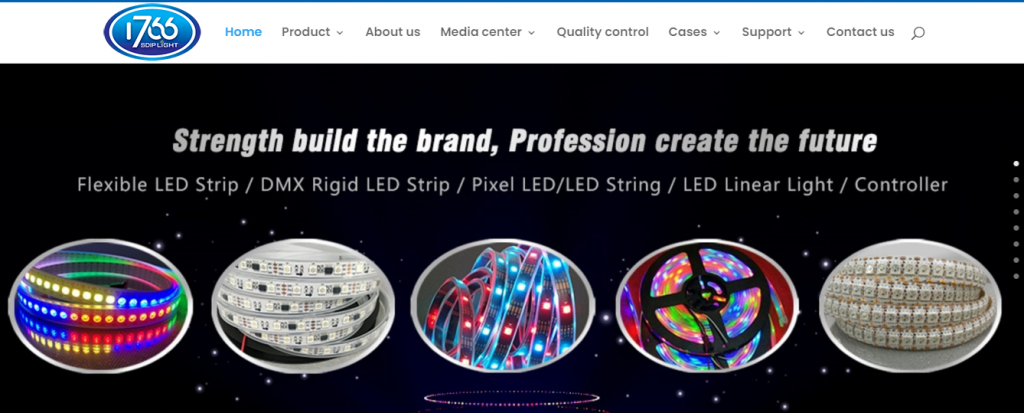
Sdiplight sells engineering time rather than a fixed catalog. The Guangdong manufacturer employs around 200 people including engineers and a sales team, and structures its R&D around the specific industrial applications its clients bring in.
Practically, that means you can specify lumen output per meter, correlated color temperature, LED density and reel length rather than choosing from stock configurations. That flexibility is valuable when a project’s photometrics are fixed by a lighting calculation and no standard reel matches. It also means the burden of specifying correctly sits with you.
- Best for: non-standard photometric requirements and OEM programs with a fixed spec sheet.
- Ask before ordering: an LM-80 and TM-21 lifetime report for the exact LED package used in your custom build.
YouTube: Sdiplight channel
8. Signcomplex
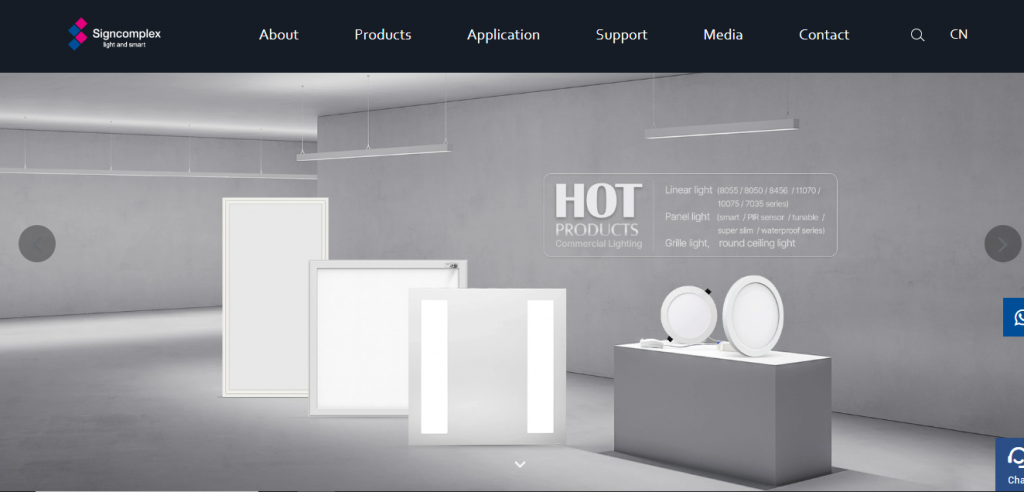
Signcomplex has the largest verified capacity on this list. Founded in 2006 in Shenzhen, it employs more than 500 people across a 50,000 m² production area, runs 50 production lines, and states an annual output of 20 million LED strips and 15 million lamps. Its R&D group alone numbers around 100 engineers.
The catalog spans LED strip lights, linear lights, downlights, panel lights and high bays, so a distributor can consolidate a mixed container from one vendor. Capacity at that scale is the relevant criterion when your risk is not price but a missed delivery window on a rollout.
- Best for: multi-category container loads and rollouts where lead-time certainty outranks unit price.
- Ask before ordering: written confirmation of which certifications apply, as Signcomplex does not publish a consolidated list.
YouTube: Signcomplex channel
9. Yoshiny Lighting
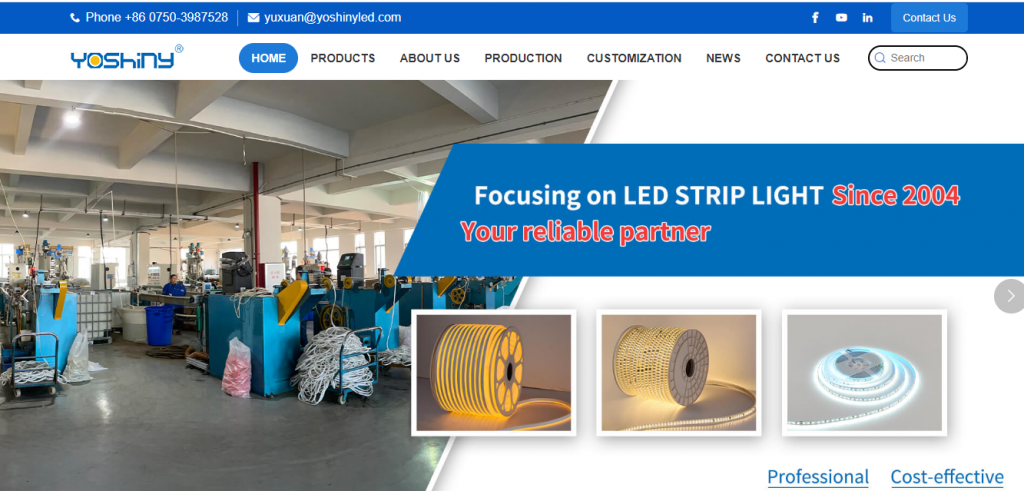
Yoshiny Lighting Technology is the AC strip specialist of this shortlist. Operating in Guangdong since 2004 with 80 staff and 6 production lines, it produces up to 70,000 meters of strip light per day across AC LED strip, DC LED strip and neon LED flex.
Mains-voltage AC strip solves a problem low-voltage tape cannot: run length. A 12 V or 24 V reel is limited to roughly 5 meters before voltage drop dims the far end, whereas 110–240 V AC strip can run to around 50 meters from a single feed. That makes it the practical choice for long facade lines, perimeter runs and warehouse coves — at the cost of a coarser cut interval and mains-voltage safety requirements.
- Best for: continuous runs beyond 10 meters where re-feeding low-voltage tape is impractical.
- Ask before ordering: the cut interval in meters and the IP rating of the end caps, which are the failure point on AC strip.
YouTube: Yoshiny channel
10. Gindestar
Gindestar is the youngest factory on this list and the one that leans hardest on material sustainability. Operating from Dongguan since 2013 with 80 staff and 8 production lines across a 1,500 m² floor, it manufactures LED strip lights and LED neon lights.
Its differentiator is jacket material: Gindestar produces halogen-free “green” PVC extrusions and silicone LED neon flex. Silicone holds color and flexibility far longer than PVC under UV and temperature cycling, which is why it has become the default for outdoor neon in 2026 — and why the material question belongs in your enquiry, not in the installer’s hands.
- Best for: outdoor silicone neon flex and projects with halogen-free material requirements.
- Ask before ordering: a material declaration confirming the halogen-free claim, since “green PVC” is a marketing term, not a standard.
Where OLAMLED Fits in Your Lighting Supply Chain
OLAMLED is a Chinese commercial lighting manufacturer that builds the fixtures a strip-light project usually sits beside, not the tape itself. Our production covers LED panel lights, LED linear lights, track lighting, tri-proof and cleanroom luminaires, supplied on an OEM and ODM basis to distributors, contractors and lighting brands.
We publish this shortlist because most buyers who source strip light from China are simultaneously sourcing hard luminaires, and splitting that across ten unvetted vendors is where margin and schedule are lost. Where a project needs cove tape plus recessed and surface fixtures on one matched CCT and one SDCM tolerance, we supply the fixture side and coordinate the specification against your strip supplier’s data.
- Color matching: we bin panel and linear fixtures to the same CCT and SDCM tolerance you specify for the strip, so a cove and a downlight do not read as two different whites.
- Documentation: LM-79 photometric files, LM-80 chip data and IES files supplied with the quotation rather than after the order.
- Consolidation: mixed-category loading from one factory, which reduces both freight cost and the number of suppliers your compliance team has to audit.
- Development: see our OEM and ODM services for private-label and custom-housing programs.
If your enquiry spans strip and fixtures, send us the specification and we will tell you honestly which half we should quote. But before you send any enquiry, how do you confirm the factory on the other end is a factory at all?
How to Verify a Chinese LED Strip Light Supplier in 2026
You verify a Chinese LED strip light supplier by checking four things in order: legal identity, production evidence, test documentation and a physical sample. Skipping straight to the sample is the most common and most expensive mistake, because a good sample proves nothing about the reel you receive three months later.
Step 1: Confirm factory or trading company
Ask for the business license and read the registered scope of business: a manufacturer’s license states production, a trader’s states wholesale or import-export only. Then request a live video walkthrough of the SMT line showing the reel of your LED package being placed — a trading company cannot produce one on demand. Our guide on how to identify whether an LED supplier is a factory or a trading company covers the full check.
Step 2: Demand the four documents that actually mean something
Certification logos on a website are not evidence. Request these four, each with a traceable number you can look up in the issuing body’s database:
- LM-79 test report — measured lumen output, efficacy, CCT, CRI and chromaticity for the finished strip, from an accredited lab.
- LM-80 data plus a TM-21 projection — lumen maintenance for the LED package over time, which is the only defensible basis for a 50,000-hour lifetime claim.
- CE Declaration of Conformity with the underlying EN test reports — CE is self-declared, so the mark alone proves nothing without the reports behind it. See our summary of European safety regulation and certification requirements.
- RoHS and REACH declarations — required for the EU and increasingly requested by North American specifiers.
Step 3: Run a sample protocol, not a sample glance
Order samples from three shortlisted factories in the same CCT and measure them side by side under identical conditions. Check the color difference between reels and along a single reel — that variation is what CRI and SDCM quantify, and it is invisible on a spec sheet. Then run the strip for 48 hours at full load in an enclosed profile and measure the FPC temperature; a board that exceeds roughly 60 °C in service will not reach its rated life.
Step 4: Structure the first order to limit exposure
Keep the first purchase order small enough that its total value is a loss you can absorb, pay by letter of credit or a staged deposit rather than a full T/T in advance, and write the acceptance criteria — measured lumens per meter, CCT tolerance in SDCM, and maximum FPC temperature — into the contract rather than into an email. If you are importing directly, our guide to importing LED lights from China covers Incoterms, inspection and customs documentation.
What Changed for LED Strip Buyers in 2026
Four changes reshaped LED strip procurement between 2024 and 2026: the European ecodesign framework was replaced, US import duties on Chinese lighting stayed elevated and volatile, light-quality expectations moved up a tier, and smart-control interoperability consolidated around a small number of protocols. Each one changes what you should write into a specification.
EU ESPR and the Digital Product Passport
Regulation (EU) 2024/1781 — the Ecodesign for Sustainable Products Regulation, or ESPR — entered into force in July 2024 and replaces the old Ecodesign Directive 2009/125/EC. The implementing measures written under the old directive, including the lighting regulation that governs light sources, remain valid until 31 December 2026, after which ESPR becomes the sole framework.
Two consequences matter for strip light. First, ESPR extends requirements past energy efficiency into circularity and replaceability, and gives regulators the power to require that light sources in a luminaire be replaceable. Second, product-specific delegated acts rolling out between 2026 and 2030 introduce the Digital Product Passport: a QR code carrying sustainability, material and compliance data that consumers, market-surveillance authorities and customs officers can read. Ask any EU-bound supplier now what their DPP readiness plan is — retrofitting product data across a catalog takes longer than a purchase cycle.
US duties on Chinese LED lighting
LED strip light imported into the United States generally classifies under HTS heading 8539.52 (LED lamps and light sources) or 9405.42 (LED luminaires and fittings), and most Chinese LED lighting has carried a 25% Section 301 List 3 surcharge on top of the normal MFN duty since 2019. Additional surcharges have been layered on and revised repeatedly through 2025 and 2026.
Because the applicable rate depends on your exact classification and can change between quotation and arrival, verify your HTS code at hts.usitc.gov and confirm the current stacked rate with your customs broker before you price a shipment. Quote landed cost, not FOB, and state in the purchase order who absorbs a duty change between order and delivery.
The 2026 light-quality baseline
Specifications that read as premium in 2024 are now the entry point for project-grade strip. Write these into your enquiry as minimums:
| Parameter | 2026 project-grade minimum | Why it matters |
|---|---|---|
| CRI (Ra) | ≥ 90, and ≥ 95 for retail and hospitality | Color accuracy of merchandise, skin tones and finishes |
| SDCM | < 3 (3-step MacAdam ellipse) | Reel-to-reel and along-reel color consistency |
| Flicker | Driver switching ≥ 1,000 Hz, low percent flicker | Camera compatibility and occupant comfort |
| Spectrum | Full-spectrum options for human-centric schemes | Circadian and wellbeing specifications |
| Density | COB or ≥ 240 LEDs/m for visible-source coves | Eliminates the dotted appearance through a diffuser |
Control protocols: Matter, DALI-2 and D4i
Smart-control interoperability consolidated around three names in 2026. Matter and Zigbee 3.0 dominate residential and light-commercial work because they let hardware from different brands share one controller. DALI-2 remains the commercial standard, and its D4i extension adds what specifiers increasingly demand: on-board storage of luminaire asset data, energy consumption and diagnostic reporting, which is what makes an installation legible to a building management system years after handover.
For strip light, the protocol lives in the driver or controller rather than in the tape, so the question to ask a strip factory is which certified control gear it pairs with — not whether the strip itself is “smart”. Our comparison of DMX versus DALI lighting control covers the choice for entertainment versus architectural work.
Strip or Linear Luminaire? Settle This Before You Shortlist
A large share of enquiries that begin as “LED strip” should not end there. Strip is a component: tape, profile, diffuser and driver, assembled on site into something that emits light. A linear luminaire is a finished product: one part number, integrated driver, a declared photometric file and a declared glare rating. The two are priced, specified and warranted differently, and picking the wrong class is expensive to discover late.
The failure mode we see most often is strip specified for general lighting in a commercial ceiling. It survives until design review, and then three things surface at once:
- No photometric file. A DIALux or RELUX calculation needs an IES or LDT file for the assembled fixture. A reel of tape has none, because photometry is a property of the finished luminaire — tape, profile and diffuser together — not of the component.
- No UGR figure. EN 12464-1 sets UGR ≤ 19 over screen-based workstations. A strip in a bare profile cannot be declared against it; the number only exists once the optic is fixed.
- Voltage drop and split warranty. Long 24 VDC runs need re-feeds and larger conductors, and when output drifts at year three the tape, the driver and the profile are three suppliers pointing at each other.
- Installation labor. Cutting, soldering, sealing and aligning tape in profile is measured in hours per run; a linkable luminaire is measured in minutes per fixture.
The rule of thumb that holds on almost every project: if the source is concealed and the job is decorative — coves, under-cabinet, signage, curved or irregular geometry — specify strip. If the run is visible and has to hit a lux level and a glare limit, specify a luminaire. In that second case an LED linear light ships with the IES file and the UGR figure already declared, links into continuous runs up to 30 m, and carries one warranty; the office linear light range is the EN 12464-1 subset of it.
Plenty of projects legitimately need both — tape in the cove, luminaires in the ceiling, matched to one CCT and one SDCM tolerance. If yours does, settle the class per application first, then use the strip specification decisions below for the half that genuinely is strip.
Types of LED Strip Lights
LED strip lights divide into eight types defined by how the LEDs emit color, how the board is built and how the strip is protected. Choosing the type before you contact a factory shortens the quotation cycle considerably.
1. Single-colour LED strip
A single-colour LED strip emits one fixed color and is the simplest and cheapest configuration available. Options include white in a range of color temperatures, plus red, green and blue.
White strip carries almost all task and architectural work — workspaces, kitchens, coves and under-cabinet lighting. Saturated single colors serve accent and signage roles: red for warm, low-stimulus settings, green and blue for calm ambient washes in living and sleeping spaces.
2. RGB LED strip
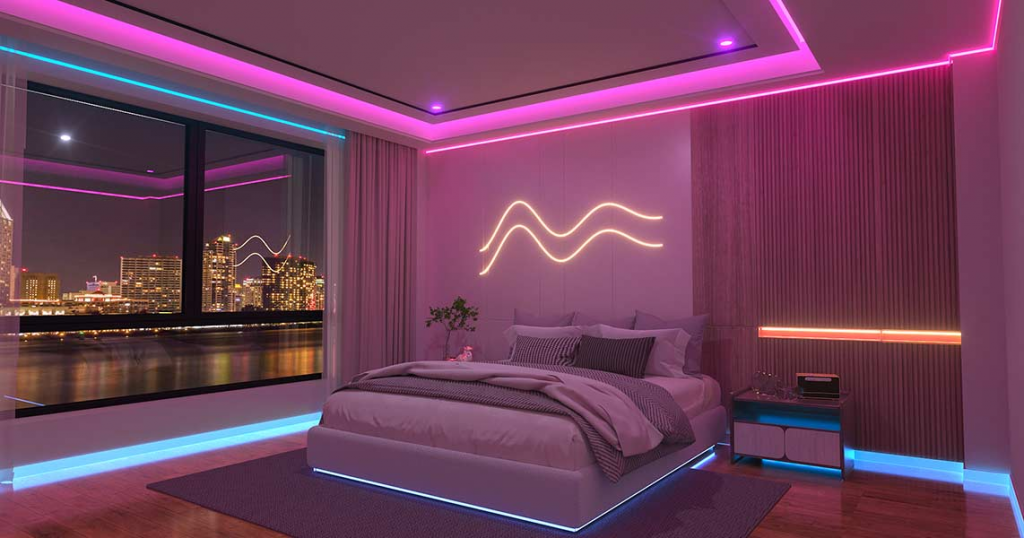
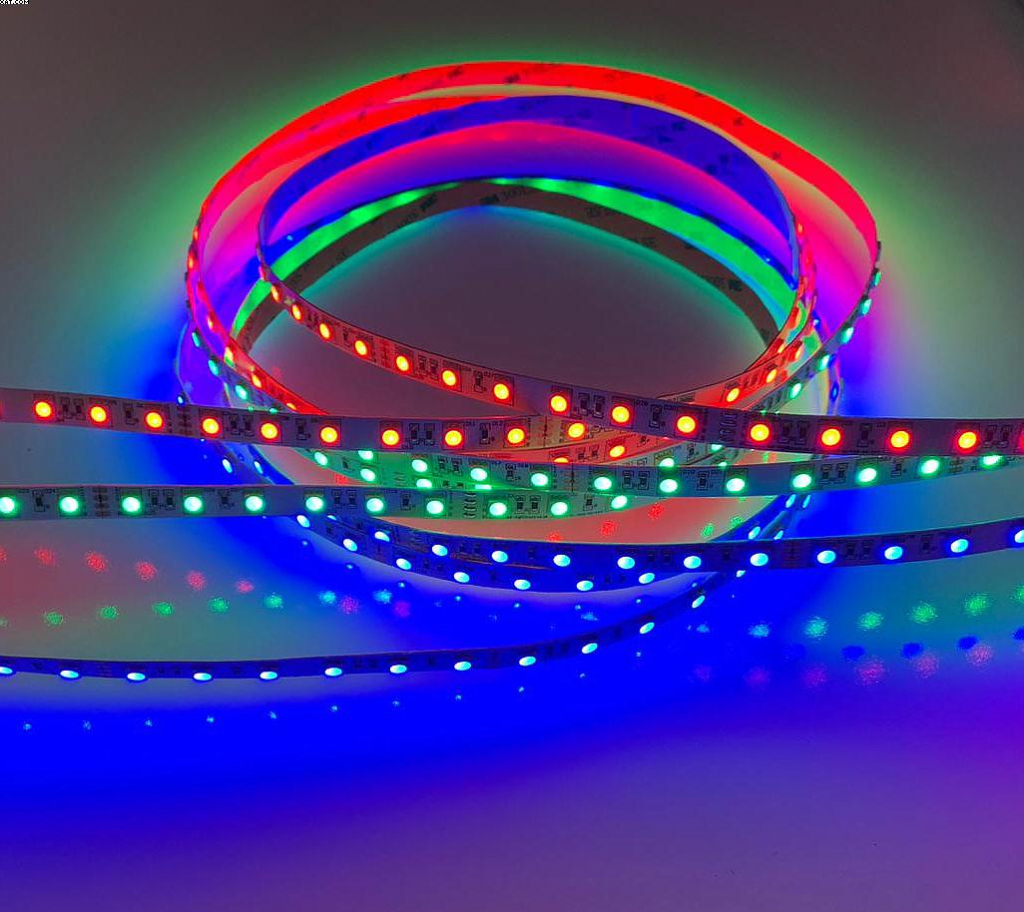
An RGB LED strip mixes red, green and blue emitters to produce a range of colors from a single tape, driven by a controller or remote. Color and intensity are set for the whole strip at once, not per LED.
The limitation is white quality: mixing R, G and B to make white produces a thin, low-CRI result unsuitable for task or retail lighting. Use RGB for color effect in entertainment, hospitality and exterior schemes, and specify a separate white channel wherever the light has to do real work.
3. RGBW LED strip
An RGBW LED strip adds a dedicated white LED chip alongside the RGB emitters, which is the direct fix for RGB’s weak white. The white channel delivers accurate, high-CRI white on its own and can be blended with the color channels to produce pastels and tinted whites that RGB alone cannot reach.
Because one tape then covers both functional white light and color effect, RGBW suits commercial interiors, residential feature lighting and exterior facades where a single run must serve everyday use and event modes.
4. Waterproof and IP-rated LED strip
A waterproof LED strip is a tape encapsulated in silicone, epoxy or an extruded sleeve so that moisture cannot reach the FPC board or the solder joints. The protection level is stated as an IP rating, and it is the specification most often under-called on site.
IP20 tape suits dry interiors only. IP65 handles splashes and covers most bathroom, kitchen and sheltered exterior work. IP67 and IP68 are for temporary or continuous immersion respectively — gardens, water features, pool surrounds. Note that the encapsulation traps heat, so an IP68 strip must be de-rated or run at lower drive current to reach the same life as an equivalent IP20 reel.
5. Flexible versus rigid LED strip
Flexible strip is built on a bendable FPC board and follows curves, corners and irregular surfaces, which is why it dominates cove lighting, curved walls and architectural features. Rigid strip is built on a fixed aluminium-backed board that holds its shape and conducts heat away from the LEDs.
Rigid strip is the better engineering choice wherever the line is straight and the output is high: under-cabinet runs, display cases, shelf lighting and freezer or cabinet applications. Its metal core also gives it a measurable thermal advantage, so a rigid board typically sustains a higher drive current than a flexible one of the same LED count.
6. Addressable (pixel) LED strip
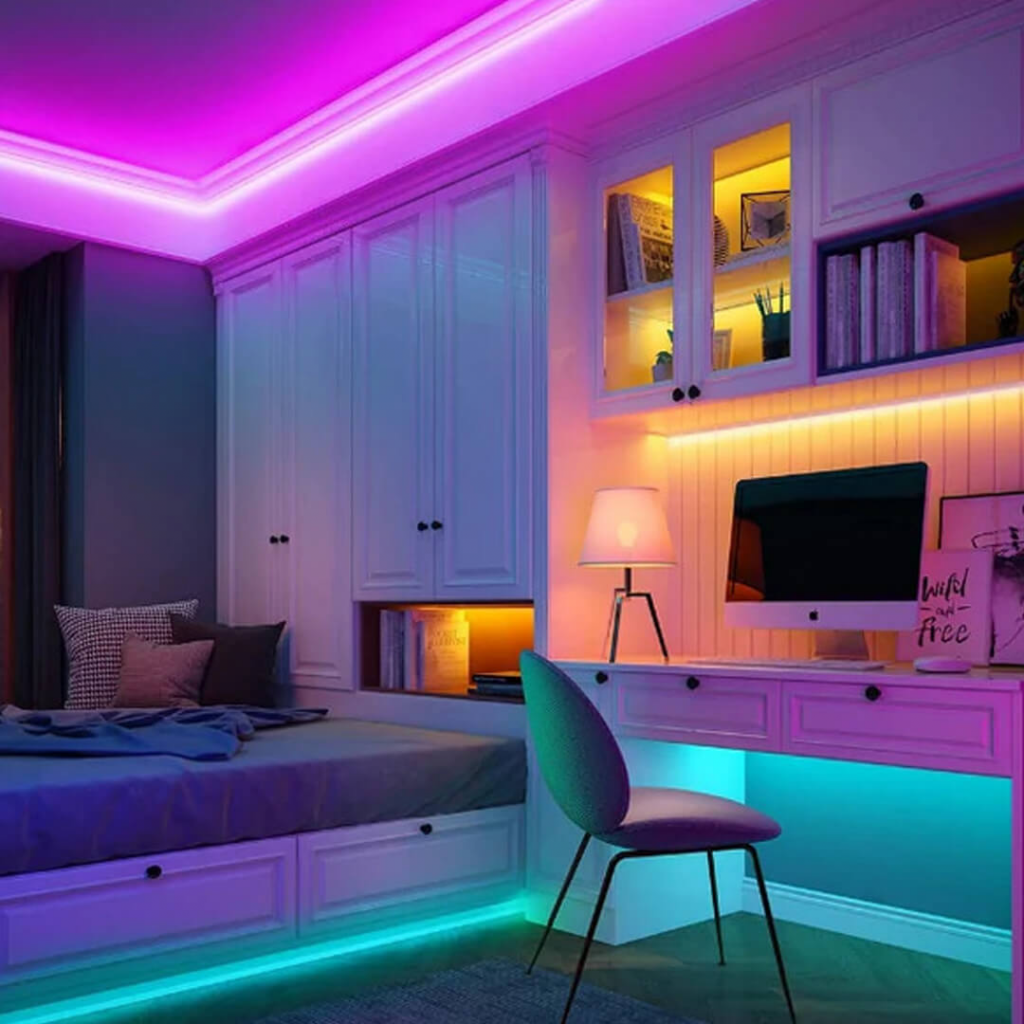
An addressable LED strip carries a driver IC that lets each LED, or each small group of LEDs, be controlled independently. That per-pixel control is what makes chases, gradients, video effects and sound-reactive animation possible on a single tape.
Addressable tape is specified by its IC type and pixel pitch as much as by its lumen output, and it needs a data controller rather than a plain dimmer. It belongs in entertainment, retail display, media facades and signage — not in general lighting, where the added cost and failure surface buy nothing.
7. Tunable white LED strip
A tunable white LED strip carries two white LED channels at different color temperatures — typically a warm channel around 2700 K and a cool channel around 6500 K — and blends them to produce any CCT between the two.
Warm settings create relaxed, low-alerting environments for evening and hospitality use; cool settings support focus and visual acuity for daytime and task work. Tunable white is the enabling technology behind human-centric and circadian lighting schemes, and it is the type most often paired with DALI-2 or Matter control. A dim-to-warm variant, which shifts warmer as it dims to mimic an incandescent lamp, is the residential and hospitality favorite.
8. COB LED strip
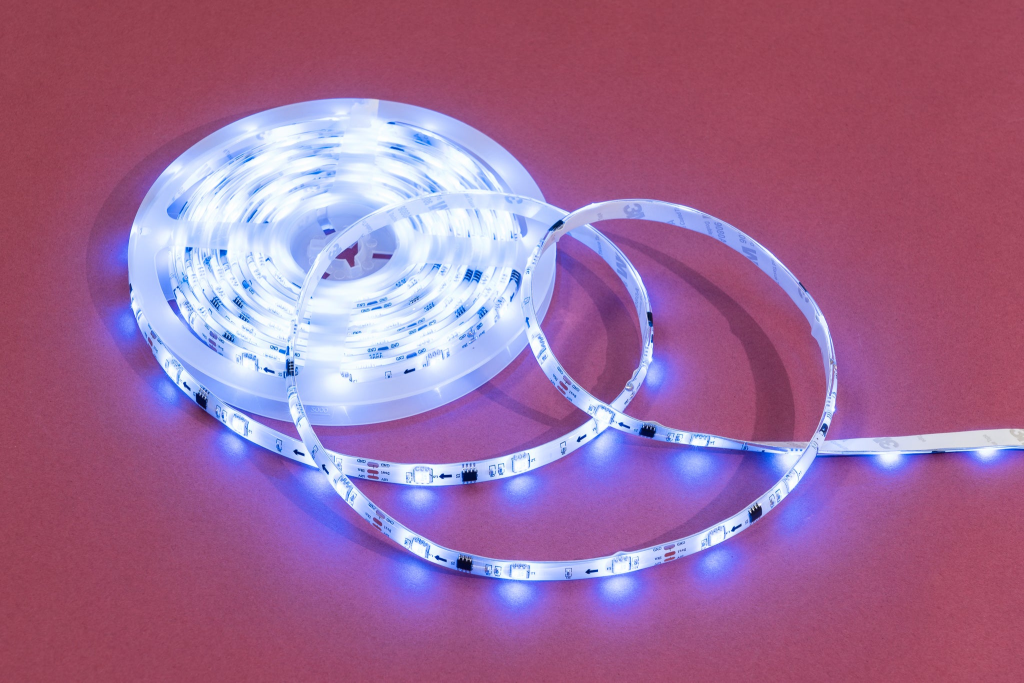
A COB (chip-on-board) LED strip places hundreds of bare LED chips directly onto the board in a dense line and covers them with a single continuous layer of phosphor, producing an unbroken band of light instead of a row of visible dots. It is the type that grew fastest between 2024 and 2026, and it has become the default for any cove or profile where the light source is visible or the diffuser sits close to the board.
Beyond appearance, COB construction spreads heat across the whole board rather than concentrating it at discrete solder points, which improves thermal performance and lifetime. It also bends more tightly than SMD tape without stressing joints. Typical uses include cove and cornice lighting, under-cabinet runs, TV backlighting, photography and video key lighting, and any detail where a dotted reflection would be visible in a glossy surface.
How to Specify LED Strip Lights: Nine Decisions
Nine parameters determine whether a reel performs on site: color temperature, environment and IP rating, voltage, brightness, luminous efficacy, CRI, physical dimensions, power supply and build quality. Settle all nine before you request quotations, because changing one of them after tooling starts resets your lead time.
1. Color temperature (CCT)
Correlated color temperature describes the hue of a white light source, measured in kelvin (K). Lower values read warm and yellow; higher values read cool and blue.
| CCT | Appearance | Typical application |
|---|---|---|
| 1800 K | Yellow-orange, candle-like | Restaurants, bars, intimate hospitality |
| 2400 K | Warm amber-brown | Event and wedding lighting, warm accent |
| 2700 K | Incandescent equivalent | Bedrooms, living rooms, residential coves |
| 3000 K | Halogen-equivalent warm white | Schools, offices, general interior lighting |
| 3500 K | Neutral warm white | Retail, showrooms |
| 4000 K | Natural white | Kitchens, task lighting, workplaces |
| 5000 K | Daylight | Laboratories, hospitals, inspection areas |
| 6500 K | Cool daylight | Photography, videography, industrial |
2. Indoor or outdoor (IP rating)
Match the IP rating to the actual exposure, not to the room name. IP20 is adequate for dry interior locations; IP65 is the working minimum for bathrooms, kitchens and sheltered exteriors; IP67 and IP68 are required where the strip may be submerged.
Under-specifying here is the leading cause of early strip failure, because moisture reaching the copper track corrodes it long before the LEDs degrade. Over-specifying is not free either — encapsulation traps heat and shortens life unless the strip is de-rated.
3. 12 VDC, 24 VDC or mains AC
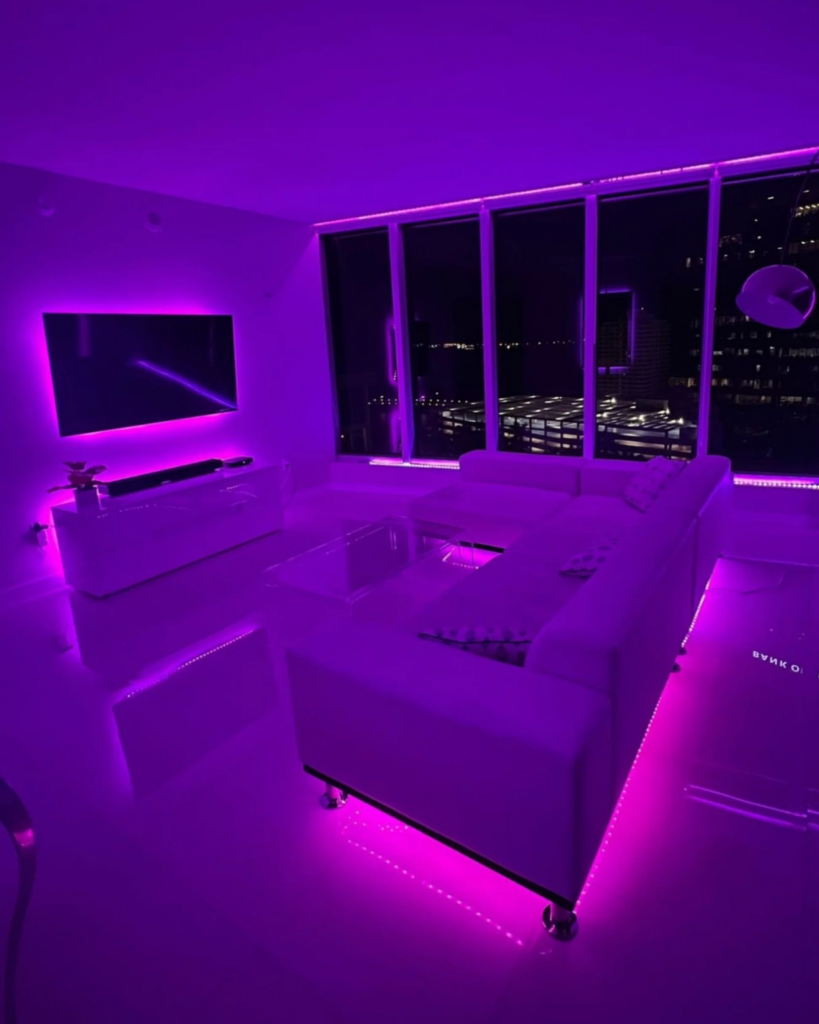
Voltage decides your maximum run length and your cut resolution. A 12 V strip has a shorter cuttable segment, which makes it easier to trim to an awkward dimension, and it matches the native 12 V systems in vehicles, boats and yachts.
A 24 V strip halves the current for the same power, so voltage drop across the run is lower and the strip holds its brightness further from the feed. That makes 24 V the default for architectural and commercial work, and it has become the more common specification overall. Where a single run exceeds roughly 10 meters and re-feeding is impractical, mains-voltage AC strip extends the run to around 50 meters at the cost of a coarser cut interval.
4. Brightness and lumens per meter
Specify strip brightness in lumens per meter, never in watts per meter. A lumen measures the light a source actually emits; a watt measures only the power it consumes, and two strips drawing the same wattage can differ by 40% in output.
As a working guide, accent and cove lighting typically needs 300–700 lm/m, under-cabinet task lighting 700–1,200 lm/m, and primary or indirect ceiling lighting 1,200 lm/m and above. Always confirm whether the quoted figure is measured for the finished strip or calculated from the LED datasheet — the difference is usually 10–15%, and it grows once a diffuser is fitted.
5. Luminous efficacy
Luminous efficacy is the ratio of light output to power consumed, expressed in lumens per watt (lm/W). It is the single number that tells you how efficiently a strip converts electricity into light, and therefore how much it costs to run.
A strip with higher efficacy produces more light from the same power, which lowers the operating cost, reduces heat inside the profile and extends life. Efficacy also trades against CRI: a 90+ CRI strip typically gives up 10–20% efficacy versus an 80 CRI equivalent, which is a trade worth making in retail and worth questioning in a warehouse.
6. CRI and SDCM
The color rendering index measures how faithfully a light source reproduces the color of an object compared with a reference source such as daylight. A higher CRI means colors appear closer to how they look under the sun.
CRI alone is not enough for a project specification. SDCM — the standard deviation of color matching, expressed in MacAdam steps — measures how consistent the white is between one reel and the next and along a single run. A strip can hold CRI 90 and still show a visible color break where two reels join if its SDCM is loose. Specify both: CRI ≥ 90 and SDCM < 3 for project-grade work.
7. Length, width and LED density
LED strip lights ship in 5-metre reels because voltage drop makes longer low-voltage runs impractical: past 5 meters on a 12 V or 24 V strip, the far end measurably dims relative to the feed end. Width ranges from 4 mm to 12 mm and is set by the LED package and the number of parallel copper tracks.
LED density, quoted in LEDs per meter, drives both brightness and appearance. Densities of 60 LEDs/m show visible dots through most diffusers; 120 LEDs/m is the general-purpose choice; 240 LEDs/m and COB construction give a continuous line. Check the width against the internal dimension of your aluminum profile before ordering — a 12 mm tape will not seat in a 10 mm channel.
8. Power supply and driver
The driver decides whether a good strip performs or flickers. Size it on three rules and choose the format on the fourth:
- Match voltage exactly. A 24 V strip on a 12 V supply will not light; the reverse destroys the strip.
- Size to 120–130% of load. Total the strip’s watts per meter across the full run, then add 20–30% headroom so the driver never runs at its ceiling.
- Buy a named brand. A quality driver with a high switching frequency is what prevents visible and camera-visible flicker; a bundled no-name unit is the most common cause of it.
- Plug-in adapter or enclosed supply. Adapters suit one or two short runs; enclosed or DIN-rail supplies suit anything larger, and any run that must be dimmed needs a driver whose dimming protocol matches your control system.
9. Build quality you can inspect
Strip quality is visible in the board before it is visible in the light. Hold a sample up and check four things: the FPC should be double-sided red copper rather than single-sided, and thicker copper (2 oz or more) carries current with less voltage drop and conducts heat better.
Then look at the solder joints under magnification for consistency and absence of voids, check that the LED phosphor color is uniform across the whole reel rather than varying between batches, and confirm the adhesive is a branded acrylic tape rather than a generic foam that releases within a year in a warm profile. These four checks cost nothing and eliminate most bad suppliers before a test order.
Frequently Asked Questions
What is a typical MOQ for LED strip lights from a Chinese factory?
MOQ varies by factory and by whether the specification is standard or custom, so treat any published figure as indicative and confirm it in writing. Standard catalog reels usually carry a low MOQ because the factory holds stock; custom CCT, custom length, private-label printing or a non-standard LED package raises it sharply, because the factory must run a dedicated batch. Always ask for the MOQ and the price break table together — the MOQ alone tells you nothing about where the price actually improves.
How long is the lead time for a strip light order from China?
Production lead time for standard reels is typically shorter than for custom builds, and both sit on top of sea freight of several weeks to Europe or North America. Build the Chinese New Year shutdown into any Q1 schedule — factories close for two to three weeks and capacity is booked out well before it. Ask for the production lead time and the shipping lead time as separate numbers, because vendors routinely quote one and let you assume the other.
How long do LED strip lights last?
LED strip lights are commonly rated at around 50,000 hours, but that figure describes the LED package under laboratory conditions, not your installation. Real life depends on the drive current, the ambient temperature, the thermal path out of the profile and the driver’s quality. A strip run hard inside a sealed profile in a warm ceiling void can reach end of life in a fraction of its rated hours. Ask for LM-80 data and a TM-21 projection rather than accepting the headline number.
What operating temperature can LED strips handle?
Most LED strip lights are specified for an ambient operating range of roughly −20 °C to 50 °C, with the FPC board itself typically expected to stay below about 60 °C in service. Measure board temperature rather than room temperature: a strip in a 25 °C room but sealed inside a deep aluminum profile with no ventilation can run far hotter than its rating.
Do LED strips need heat sinking?
Yes, for any strip above roughly 10 W per meter or any strip installed in an enclosed profile. Mounting the tape into an aluminum extrusion is the standard heat sink and it is not optional at higher outputs — it is what keeps the LEDs at the junction temperature their lifetime rating assumes. Low-output decorative strip in open air generally manages without one.
Where can you cut an LED strip, and how often?
Cut only on the marked cut lines, which sit at the end of each electrically complete segment; cutting anywhere else breaks the circuit and kills the segment. The interval depends on LED density and voltage: a 30 LEDs/m strip typically cuts every 10 cm and a 60 LEDs/m strip every 5 cm, while 24 V strip has a longer segment than 12 V and therefore a coarser cut interval. Offcuts remain fully usable — solder or clip a connector to the exposed pads.
What is the maximum run length for an LED strip?
Low-voltage 12 V and 24 V strips run to about 5 meters from a single feed before voltage drop dims the far end noticeably. Beyond that, feed the run from both ends or inject power at intervals. Mains-voltage AC strip at 110–240 V extends a single run to roughly 50 meters, which is why it dominates long facade and perimeter installations.
Does humidity damage LED strip lights?
Humidity damages any strip whose IP rating does not match its environment. Moisture reaching the copper track corrodes it and the solder joints fail long before the LEDs degrade. In bathrooms, kitchens, cold stores and sheltered exteriors, specify IP65 or above and seal the cut ends — an IP65 reel cut mid-run and left unsealed is no longer IP65 at that end.
Do LED strips use a lot of electricity?
No. LED strip lights typically consume between 4 W and 20 W per meter depending on density and output, and modern strips deliver well over 100 lm/W. Compare products on lumens per watt rather than on watts alone, since a more efficient strip reaches the same brightness for less power and less heat.
Can LED strips be removed and reused?
Yes, provided the tape is lifted carefully and the FPC is not creased or stretched. Reuse the offcuts with solderless connectors, and replace the adhesive backing with fresh double-sided tape, because the original acrylic will not bond a second time.
Which Chinese LED strip light manufacturer should I choose?
Choose by the constraint that will actually break your project. If an inspector will ask for a UL or ETL file, that narrows the list to LEDYi. If the risk is a missed delivery on a large rollout, capacity points to Signcomplex. If the detail is a cove with a visible diffuser, a strip-plus-profile supplier such as Lightstec is worth the premium. If the run exceeds 10 meters, AC strip from Yoshiny solves it. Shortlist two or three against your binding constraint, then run the four-step verification above before you commit.
Next Steps for Your 2026 Sourcing
Write your specification before you write your first enquiry: CCT, CRI, SDCM, lumens per meter, voltage, IP rating, LED density and control protocol. Send the same specification to three factories from the table above, compare their LM-79 reports rather than their price lists, and structure the first order so a bad outcome is survivable.
If your project also needs panel, linear, track or cleanroom luminaires matched to the same color tolerance as your strip, contact OLAMLED with your specification and we will quote the fixture side directly from our factory.